
August is Women in Translation Month, which basically means we have a great excuse to talk about translated works written by women. In case that was not immediately obvious. I know this post is going up a little late in the month (if you follow me, you might know August has been kind of a mess), but just I still wanted to talk about some of these books. Just because we celebrate women in translation in August doesn’t mean you can’t read women in translation during the other eleven months of the year. So whether this post prompts you to add a few of these to your TBR, put them on your wishlist for your next birthday, or try to cram one more in before August is over, all that matters is that we are celebrating books by women that maybe don’t get a lot of attention.
I had initially started this post by writing down books I’d really enjoyed. But I quickly realized two things. One, they were mostly translated from Japanese. And while there’s nothing wrong with Japanese books, I wanted to come up with something a little more diverse. And two, they were books I’ve seen other people talk about. A lot.
So I thought I’d do something a little different and talk about books not a lot of people have heard of. I put together a list of twenty books by women, translated from twenty different languages. There is a wide range of genres and cultures here, and I hope you’re just as excited as I am to read some of these books. Because they all sound incredible!
Japanese – Strange Weather in Tokyo by Hiromi Kawakami, translated by Allison Markin Powell
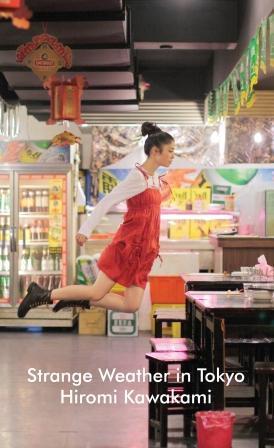
This book follows Tsukiko, a thirty-eight year old woman who lives alone in Tokyo. She basically just goes to work in an office and goes home by herself. Until one night, at a bar, she runs into one of her former high school teachers. Out of habit, she calls him “Sensei”. Tsukiko and Sensei continue to meet after that initial encounter, sharing beer and edamame and even a trip to the mountains to eat wild mushrooms. Eventually Tsukiko realizes that the comfort she has found with Sensei might be something more.
Now, I don’t personally love reading about student-teacher romances. They can be done well, but way too often feature a female protagonist who is still a teenager and a very uncomfortable age gap. I like that this one does something different. I also like that it’s a romance with older characters. It wasn’t clear from the synopsis how much older Sensei is, but I don’t remember the last time I’ve seen an actual romance novel with a never-married female protagonist in her late-thirties (who also doesn’t have children). It shouldn’t be such a novel concept, but it definitely feels rare in the world of romance novels. And I love it.
Korean – Cursed Bunny by Bora Chung, translated by Anton Hur

I feel like I have inadvertently become a fan of Korean horror over the past few years. And I’m not even mad about it. I’m not the biggest consumer of horror in general, but have definitely developed an appreciation for the brand of horror that’s coming out of South Korea. It’s very distinct, very unsettling, and (let’s be honest) quite a bit smarter than the American kind. One Korean horror novel I have already read and really enjoyed was The Hole by Hye-Young Pyun, translated by Sora-Kim Russell (also a great choice for Women in Translation Month). But today, I wanted to talk about the one I most recently added to my own TBR.
This book of short stories is a mix of magical realism, horror, and science fiction. Which you know is right up my alley. But more than that, Chung uses these surreal and fanatical elements to address the real horrors of modern society – namely, capitalism and the patriarchy. Which sounds particularly awesome. This one is high up on my personal reading list, and I have a good feeling about it.
Spanish – Fever Dream by Samantha Schweblin, translated by Megan McDowell
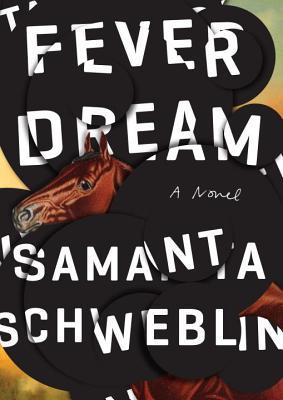
I clearly have a thing for literary fiction that is magical realism meets horror. Because that’s exactly what this is. Though I would imagine this book from an Argentinian author is very different from South Korean horror. Either way, I’m excited. This is actually the only book on this list I already own, and I’m strongly considering adding it to my Halloween reading list this year. If I don’t give in and pick it up before then.
This book is about a boy and a woman. The book opens with them sitting beside each other in a rural hospital clinic. The woman is not the boy’s mother. And that’s kind of all we get. It’s supposed to be haunting, and I have heard the title is extremely accurate. I’m definitely curious. It’ll take a lot for a book to mess with my head to the level that Mona Awad’s Bunny achieved, but I’m definitely getting those vibes here.
Polish – Flights by Olga Tokarczuk, translated by Jennifer Croft
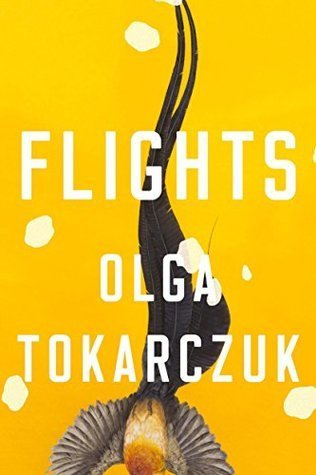
This book actually won the International Booker Prize in 2018, but I still had no idea it existed until very recently. And, to be quite honest, I still don’t feel like I have a great sense of what it’s about. But I think that’s the kind of book this is. It seems like one of those books that’s just it’s own thing. Every review I’ve read of this says it’s completely original, and as a lover of literature, that just seems like something I need to experience.
The synopsis of this book is almost abstract in a way, describing how this book explores basically the whole human experience and how we move both in time and space. This is one of the longer books on this list, but that still seems ambitious for four-hundred pages. And it sounds amazing. (Yet another book that landed on my TBR as a result of my doing research for this post. Because I needed a bigger TBR.)
Croatian – Fox by Dubravka Ugrešic, translated by Ellen Elias-Bursac and David Williams
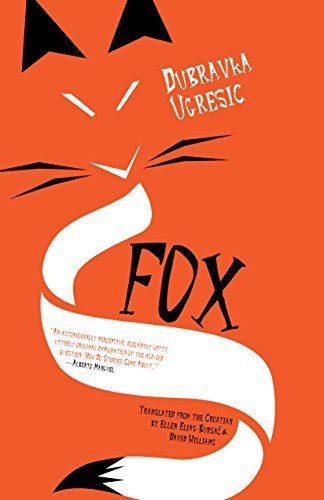
The synopsis of this book immediately grabbed my attention. “Fox is the story of literary footnotes and ‘minor’ characters – unnoticed people propelled into timelessness thought the biographies and novels of others.” Does that not make you want to read the book? It’s even shorter than Flights, but is almost as ambitious, spanning nearly a hundred years from Russia to Japan to America. I can’t articulate why exactly, but I immediately had a feeling that this is the kind of book that would stick with me. Once I eventually get around to reading it.
Turkish – A Strange Woman by Leylâ Erbil, translated by Amy Marie Spangler and Nermin Menemencioglu

Now this book is especially impressive – it’s the first novel by a Turkish woman to ever be nominated for the Nobel Prize. It’s about a young woman who aspires to be a poet while living in the oppressive social environment of Istanbul. It’s divided into four sections, in which the main characters – the girl, the father, the mother, and the woman – each share their viewpoint on the woman. It seems pretty revolutionary and feminist for something published in the seventies in Turkey, and is kind of a big deal. Definitely a shame this has less than a thousand reviews on Goodreads.
Chinese – Last Words from Monmartre by Qiu Maiojin, translated by Ari Larissa Heinrich

The story behind this book might be even more devastating than the story it contains. Qiu Miaojin was Taiwan’s most renowned lesbian writer. When she committed suicide at the age of twenty-six, this masterpiece was discovered and published posthumously. This novel tells the story of two young women, their relationship, and devastating breakup though a series of letters written by an unnamed narrator.
Last Words from Monmartre jumps between Paris, Taipei, and Tokyo and explores different cultures, languages, and genders. It’s gotten critical acclaim since it’s publication in 1996, but still has less than two-hundred and fifty reviews on Goodreads. This one is definitely on my list to read. As soon as I’m in the mood for a good cry.
French – The Elegance of the Hedgehog by Muriel Barbery, translated by Alison Anderson
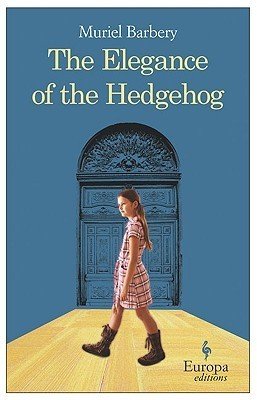
Reading the synopsis of this book kind of reminded me of both A Gentleman in Moscow by Amor Towles and A Man Called Ove by Fredrik Backman. Which are two of my favorite books, so obviously I need to read this one. It centers around Renée, a concierge at a fancy apartment building. Outwardly, Renée conforms to the stereotypes the residents expect. But inside, she’s actually an autodidact who studies art and philosophy and music.
In the course of her work, Renée encounters Paloma, who is an extremely intelligent twelve-year-old, and the daughter of a boring politician. Paloma has decided to end her life on her thirteenth birthday. But until then, she’s going to behave as everyone expects her to. You can kind of see where this is going. And I love it. It’s supposed to be moving and funny, and I’m pretty sure I need to read it.
Norwegian – Because Venus Crossed an Alpine Violet on the Day That I Was Born by Mona Høvring, translated by Kari Dickson and Rachel Rankin

This book follows two sisters who were extremely close a children, and are now reuniting after years apart. Martha has been discharged from a sanatorium after a mental breakdown. And Ella agrees to keep her company in the hope that they can reconnect. But that doesn’t end up going according to plan, and Martha disappears in a rage. Ella is left to put the pieces back together. And her encounters with a whole cast of characters – a hotel receptionist, a drunken soldier, a carpenter – help her on that journey.
I can’t quite figure out if this one is supposed to be more sad or hopeful, but either way it sounds great. It’s gotten high praise for the writing itself, which is always a draw for me. Especially when it has the additional challenge of being translated. Also, that title just makes me especially curious about this book and the author. (And I’m a little annoyed with myself for waiting so long to put this post together, because I probably would have just read half this list in August if I’d thought to do so.)
Swedish – The Bear Woman by Karolina Ramqvist, translated by Saskia Vogel

According to the synopsis, this book is “a journey of feminism and literary detective work spanning centuries and continents”. It’s about a young French noblewoman, Marguerite de la Rocque, who was abandoned on an island with her lover in the 1540s. And in present day Stockholm, the author becomes captivated by the image of Marguerite sheltered in a dark cave after her companions have died. She has to find out more about the woman she called the Bear Woman.
This is actually nonfiction, which is utterly fascinating. And it’s also marked as unfinished, presumably because the author wasn’t actually able to find much on Marguerite. As the synopsis says, “so much of history is written as to gloss over male violence”. But I am absolutely intrigued by this story, and I really want to know more about what information she was able to uncover.
Greek – Portrait Before Dark by Liana Sakelliou, translated by Aliki Barnstone

This might be one of the most unique synopses I have ever read, and I’m intensely curious. It’s also a 2022 release and has zero reviews. Anywhere. Which I think means I need to read it and see what it’s all about. According to the synopsis, this book is a “poem cycle that constitutes an imaginary dialogue between the poet and patron of the arts, Edward James, and the eccentric Viennese ballerina and start of the 1920s, Tilly Losch.” The ebook is under 100 pages, so I think I’m going to buy a copy and read it after I finish writing this post. At least then I will have read one translated book by a woman this month.
Finnish – The Core of the Sun by Johanna Sinisalo, translated by Lola Rogers

Like I said before, I am already into the very specific brand of horror that comes from Korean authors and filmmakers. But apparently Finland has something similar when it comes to literary speculative fiction. And it is called “Finnish weird”. Which sounds like something I need in my life, and apparently Johanna Sinisalo is the master. I absolutely believe it, because the synopsis alone of this book is one of the weirdest things I have ever read. And you all know I read a lot of weird things.
This novel follows a young woman who develops an addiction to illegal chili peppers. Which leads her into a world where love, sex, and free will are controlled by the state. The Eusistocratic Republic of Finland has bred a human sub-species of submissive women, called eloi. Intelligent, independent women are sterilized so as to not pass on their “defective” gene. And if this is not the love child of H. G. Wells and Franz Kafka, I don’t know what is. I will absolutely be reading this book as soon as my brain has the capacity to be completely forked up again.
German – The End of Days by Jenny Erpenbeck, translated by Susan Bernofsky

This award-winning book consists of five separate “books”, each describing a different death of the same unnamed female protagonist. In the first, she is a baby in the early twentieth-century Hapsburg Empire. Then a girl in Vienna after WWI. Next, a Communist living in Russia with her husband before ending up in a labor camp. The whole book seems to be shining a spotlight on different experiences of women throughout the twentieth-century. Which, if you like historical fiction, sounds really interesting. I also like that there’s a bit of a mystery – what happens after the fifth death?
Catalan – Death in Spring by Mercé Rodoreda, translated by Martha Tennent

Speaking of death… we have this horror novel about a nameless town with a bizarre customs. Burying the dead in trees after filling their mouths with cement to prevent their soul from escaping. Or sending a man to swim in the river that runs under the town to discover if they’ll be washed away by a flood. It’s narrated by a fourteen-year-old boy as he comes to terms with the ritual violence all around him.
While this book clearly has some pretty disturbing subject matter, it’s also been highly praised for its poetic language. It was written over twenty years after the author was forced into exile by the Spanish Civil War, and is lauded as the grand achievement of her career. If you want something extra dark – especially since we’re approaching spooky season – this might be the book for you.
Hungarian – The Door by Magda Szabó, translated by Len Rix

In this book, we follow a busy young writer who decides to hire a housekeeper recommended by a friend. The housekeeper turns out to be efficient, but somewhat odd. She’s stubborn and has a flagrant disregard for her employer. She’s also very guarded about her personal life. The novel follows the development of a strange relationship between the housekeeper and the writer built up over twenty years. Despite a rock start, they develop somewhat of a friendship, and we learn more about why the housekeeper is the way she is. I like stories like this about unexpected friendships and this one has gotten some pretty great reviews, so it’s on my list now.
Arabic – The Queue by Basma Abdel Aziz, translated by Elizabeth Jaquette

It was not easy to choose a book translated from Arabic, since there are obviously many, many different countries that speak that language. But this one seemed so interesting, and has gotten some pretty great critical reviews, so this is what we’re going with. (If you have any other suggestions, leave them in the comments below to add to the list!)
This book is a surrealist take on life after the Arab Spring in modern Egypt. There’s a centralized authority called “the Gate” that rose to power after a failed uprising. And everyone has to get permission from the Gate in order to do basically anything. But the Gate never opens, and the queue in front of it just keeps getting longer. This is science fiction that’s supposed to be reminiscent of Orwell and Kafka, and I can absolutely see it. Just reading the synopsis creeped me out a little. I’m intrigued.
Russian – Three Apples Fell from the Sky by Narine Abgaryan, translated by Lisa C. Hayden

Moving on to something less dark… we have this novel, which is set in an isolated village in the Armenian mountain. It follows a very small, tight-knit community who comes up with a plot to bring their two most stubbornly single residents together. Which gives them something new to gossip about. I love that this book is really just about the idiosyncrasies and people living in a tiny little village. It seems like the perfect little cozy read for fall. (This post is making me rethink my entire reading plans for the rest of the year.)
Indonesian – Apple and Knife by Intan Paramiditha, translated by Stephen Epstein

More horror… this time in short story format. These stories are set within everyday Indonesian society – in boardrooms, in shanty towns, on dangdut stages – but are creepy, and a little weird. And like quite a bit of the horror on this list, this is also of the subversive feminist kind. This collection also draws inspiration from myths and fairy tales. All of which sounds fantastic. A brief warning for any of you who are interested in picking this one up, based on the synopsis I thin this might be a little graphic and maybe a bit gory. Perfect for spooky season, but not if you can’t stomach that sort of thing.
Bulgarian – Four Minutes by Nataliya Deleva, translated by Izidora Angel

Apart from horror commentaries on society, another recurring theme in this post is the lesbian coming-of-age story. This one set in post-communist Bulgaria, following an orphan who suffered daily horrors growing up and now struggles to integrate into society as a gay woman. As a way to heal her trauma, she volunteers at an orphanage and tries to adopt a young girl. She is, of course, stopped by the government because of her sexuality.
What is even more interesting about this book is that it integrates psychology not just into the narrative, but also into the structure of the story itself. In addition to the main story, the novel contains nine other standalone sections highlighting frequently ignored voices. Each section is meant to be read in approximately four minutes (hence the title), which is a nod to a social experiment that suggested it only takes four minutes of looking someone in the eye and listening to them in order to accept and empathize with them. I think that’s kind of genius.
Portuguese – What are the Blind Men Dreaming? by Noemi Jaffe, translated by Julia Sanches & Ellen Elias-Bursac

Last, but certainly not least, we have this novel from Brazil. It follows three generations of women. First, a woman’s diary written upon her liberation from Auschwitz. Then her daughter, exploring the power of memory, survival, and bearing witness. And finally, her granddaughter who reflects on the Holocaust and Jewish identity seventy years after WWII. This is probably not the first subject you think about when you think about a Brazilian novel, but Brazil was actually a fairly common destination for Jewish refugees and survivors during and after the war.
I love that this book explores how subsequent generations were affected by the horrific experiences of their parents and grandparents. And also what that meant, and still means, for Jews universally. I think this is a relatively common narrative structure in contemporary novels, and I like that this one is telling a very important story.
You made it to the end! I hope you enjoyed this post and that you maybe found something to add to your own TBR. Have you read any of these books? What books would you add to this list?
And check out my bookshop, where you can buy books and also shop my curated collections of my personal favorites AND all of the books I’ve read for my reading eperiments. Or you can just buy whatever books you want to. I get a small commission at no extra cost to you, and you get to support your choice of indie bookstores – it’s a win all around!
Click here if you want to check out my bookshop and support this blog!


10 Responses
Everything on this list sounds really different!
The only thing I’ve read is flights, but I just couldn’t get past the first few pages!
Totally! It’s such a wide variety of books – I love it. Do you remember what it was about Flights that you couldn’t get through?
I’m not sure to be honest! I think I just didn’t vibe well with it!
Totally fair! I was just curious
This is such a great list! One of my projects for this year (that I’m failing at lol) is to read more translated literature, so this will be very helpful in finding new books to try! I keep walking past Cursed Bunny in my local bookstore…maybe it’s time I pick it up, though I’m usually not much of a horror person. Otherwise, I had only heard of The Elegance of the Hedgehog before but didn’t actually know what it was about!
One book that’s on my TBR is Hotel Silence by Auður Ava Ólafsdóttir, translated by Brian Fitzgibbon. It’s about a man who’s life falls apart midlife-crisis style who ends up moving across the world into an old hotel that’s also kind of falling apart.
Thanks! Hotel Silence sounds really good! I hadn’t heard of it before, but just added it to my TBR. Thanks for the recommendation ?
I mean to read more German books, so my actual goal is to read less translated/foreign language books hahaha I should really return to my roots every now and then. I don’t think I’ve heard of Jenny Erpenbeck before, but I might just check out her work.
Great blog topic. I don’t read enough WIT, so I’ll definitely add a couple of these to my TBR.
Thanks! Hope you find a couple you enjoy!
I have The Elegance of the Hedgehog on my to read list. When I got the book at a book sale the lady at the check out said it was good.
I have heard of Fox and Door. The other books are new to me.